


FoAR是由高等教育出版社和太阳集团tyc122cc联合主办的全英文学术期刊
建筑学/城乡规划/风景园林
本刊已被A&HCI / EI / CSCD / Scopus / DOAJ / CSTPCD收录
中国科技期刊卓越行动计划 英文领军期刊
FoAR
2026年第二期已上线
Frontiers of Architectural Research是由高等教育出版社和东南大学联合主办的全英文学术期刊,是教育部重点支持的前沿系列(Frontiers)学术期刊中的一本。已被A&HCI收录。本刊于2012年创刊,2022年起改为双月刊(一年六期)。收录论文内容覆盖但不限于建筑设计及其理论、建筑科学及技术、城市研究、风景园林、建筑历史及遗产保护、绿色低碳建筑等研究领域。是一本全球发行并可开放获取(Open Access)的期刊。
Frontiers of Architectural Research优先发表创新突出、科学性和技术性强的研究论文,特定研究领域中的综述性文章和案例分析,采用严格科学方法和使用前沿技术进行研究的论文,同时也欢迎探讨建筑社会属性的高水平论文。按照国际惯例,对所有论文进行严格地同行评议并只接受英文投稿。
Frontiers of Architectural Research / FoAR
建筑学研究前沿
Volume 15 / Issue 2 / April 2026
Pages 353-728
▼
Peer Review Under Responsibility of Southeast University
东南大学负责同行评议
Pages 353-369
Traditional village preservation status evaluation and optimization based on YOLOv10 and random forest model—take the Tibetan-Qiang region in northwest Sichuan as an example
Xiaoyi Zu (a), Peng Liu (b), Chen Gao (c)(d)* , Rui Hou (a), Zining Huang (a), Yuxin Ao (a), Yi Wang (a)**
(a) School of Architecture, Tsinghua University, Beijing 100084, China
(b) The Export-import Bank of China, Beijing 100031, China
(c) Leibniz Institute for Research on Society and Space (IRS), 15537 Erkner, Germany d Geography Department, Humboldt-Universita¨t zu Berlin, 12489 Berlin, Germany
Pages 370-384
A comparative study on the spatial vitality of national squares: A visualization analysis based on multi-source data
Hui-nan Zhang, Shi-yu Wei*School of Architecture, Tsinghua University, Beijing 100084, China
Pages 385-408
Spatiotemporal characteristics and influencing factors of pop-up activities in Beijing based on artistic ecosystem framework
Delong Sun (a)(b), Xiaoyan Mi (a)* , Jiayu Wang (a), Xuefeng Jiang (a), Shichen Zhao (a)(c)
(a) School of Architecture, Tianjin University, Tianjin 300072, China
(b) School of Architecture and Urban Planning, Chongqing University, Chongqing 400044, China
(c) Department of Architecture and Urban Design, Faculty of Human-Environment Studies, Kyushu University, Fukuoka 819-0395, Japan
Pages 409-423
Navigating CLIPedia: Architectonic instruments for querying and questing a latent encyclopedia
Agostino Nickl
Institute of Technology in Architecture, Department of Architecture, ETH Zürich, Switzerland
Pages 424-444
Morphological resilience evaluation research on the conservation and renewal of historic districts: A case study on Xijie Historic District, Quanzhou
Kechen Xu (a), Yong He (a)* , Yufan Chen (b), Meizi Zhou (a)
(a) College of Civil Engineering and Architecture, Zhejiang University, Hangzhou 310058, China
(b) School of Design and Architecture, Zhejiang University of Technology, Hangzhou 310014, China
Pages 445-465
Analysis and constructing the formation of volumetric light space in the works of Louis I. Kahn
Huanjie Liu, Rui Zhang, Zao Zhang* , Rui Hu, Yinggang Wang, Qingjian ZhengSchool of Architecture, Tianjin University, Tianjin 300072, China
Pages 466-483
Design method based on modularization and customization for rural dwellings: A case study in Nanjing, China
Nan Jiang (a)* , Xiaotong Qin (b), Yuting Gu (a), Xiangfeng Li (a), Xing Jin (a)(b)**
a School of Architecture, Southeast University, Nanjing 210096, China
b School of Architecture and Urban Planning, Nanjing University, Nanjing 210093, China
Pages 484-504
Modelling hidden geometry in Madrid “malice houses” (1561–1788): Reversing traces in enlargements to discover original, ingenious designs
Esperanza González-RedondoDepartment of Architecture, University of Alcalá, Madrid, Spain
Pages 505-521
Micro-resilience assessment tool for living streets: Development, testing, and application in Chinese Jiangnan’s small and medium-sized cities
Chen Liu (a), Haoran Ma (b), Ren Zhou (a), Zhaolian Xing (a), Weimin Guo (a)*
(a) School of Design, Jiangnan University, Wuxi 214122, China
(b) Institute of Space and Earth Information Science, The Chinese University of Hong Kong, Hong Kong SAR, China
Pages 522-539
Characteristics and periodization of self-built houses in the Quanzhou coastal area based on archaeological typology method (late 19th century to early 21st century)
Tongxi Miu (a), Jing Zhuge (b)*
(a) Guizhou Qianjiang Baigong Wooden Green Building Intelligent Technology Co., Ltd., Guiyang 550000, China
(b) School of Architecture, Southeast University, Nanjing 210096, China
Pages 540-553
Multi-scale analysis of motivational mechanisms in rural tourism behavior
Weixing Xu (a)(b), Zhenyu Wang (c), Beibei Liu (a)(b)*, Liangwa Cai (b), Peng Zeng (b)**, Fengliang Tang (b)
(a) Faculty of Architecture and City Planning, Kunming University of Science and Technology, Kunming 650500, China
(b) School of Architecture, Tianjin University, Tianjin 300072, China
(c) School of Architecture and Urban Planning, Shenyang Jianzhu University, Shenyang 110168, China
Pages 554-565
The use of artificial intelligence in damage assessment of historical buildings
Meltem Barıs‚ Ararat* , Tülay Karadayı Yenice
Department of Architecture, Hasan Kalyoncu University, Gaziantep 27000, Türkiye
Pages 566-581
How site-specific spatial morphology influences healthy activities in urban green spaces: A case study of Lovers' Garden
Ziqian Cheng (a), Xiaohan Zhang (b), Yuning Cheng (a)*(a) Southeast University, Nanjing 210096, China (b) Technical University of Munich, Munich 80333, Germany
Pages 582-608
Machine learning-based study on factors influencing street vitality in urban fringe commercial districts: a case of Wuhan
Jingmei Shao (b), Yan Long (a)* , Xuejun Liu (c), Yuqiao Zheng (b), Yang Song (b), Jian Wang (g), Bo Liu (e), Jun Yang (f), Yujie Chen (h), Fan Zhang (d)
(a) School of Art and Design, Wuhan University of Science and Technology, Wuhan 430065, China
(b) School of Urban Construction, Wuhan University of Science and Technology, Wuhan 430065, China
(c) School of Urban Design, Wuhan University, Wuhan 430072, China
(d) Wuhan Planning & Design Institute, Wuhan 430010, China
(e) College of Intelligent Construction, Wuchang University of Technology, Wuhan 430223, China
(f) School of Civil Engineering and Architecture, Wuhan Institute of Technology, Wuhan 430074, China
(g) School of Management, South-Central Minzu University, Wuhan 430074, China
(h) Guangzhou Urban Planning & Design Survey Research Institute Co., Ltd, Guangzhou 510060, China
Pages 609-629
Evaluating visual experience in heritage-rich areas: A case study of the Inner Ring Road of West Lake, Hangzhou
Yan Huang (a)* , Zhixiang Fan (a), Chongxiao Wang (b), Ran Yan (a), Yilu Shi (a), You Li (a)
(a) Academy of Arts and Design, Tsinghua University, Beijing 100084, China
(b) College of Landscape Architecture, Nanjing Forestry University, Nanjing 210037, China
Pages 630-648
Architectural features and typological analysis of historical Syriac churches in Mardin rural area
Erdal Dinç (a) , Neslihan Dalkılıç (b),*
(a) Faculty of Engineering and Architecture, Department of Architecture, Mardin Artuklu University, Mardin 47200, Türkiye
(b) Faculty of Architecture, Department of Architecture, Dicle University, Diyarbakir 21280, Türkiye
Pages 649-662
Projecting resistance: A study on the architectural practice strategies of Kunming's Nanping Theater in 1939
Li Tang*, Mingjie Shi
Faculty of Architecture and City Planning, Kunming University of Science and Technology, Kunming 650500, China
Pages 663-683
ArchiBuilder: A virtual reality-based gamified experience design for architectural images in Dunhuang murals
Zhizheng Liu, Xiran Ji, Yizhu Cui, Tianzi Zhang, Jian Yao*School of Design and Arts, Beijing Institute of Technology, Beijing 102488, China
Pages 684-704
A Stanislavskian and Barthesian deconstructive analysis of Thinking Architecture of Peter Zumthor: The case of Therme Vals
Esin Yılmaz (a)* , Muzaffer Tolga Akbulut (b)
(a) Department of Architecture, Faculty of Architecture, Yıldız Technical University, İstanbul, Türkiye
(b) Department of Architecture, Faculty of Architecture and Design, Fatih Sultan Mehmet Vakıf University, İstanbul, Türkiye
Pages 705-728
Ranking and sorting the Pareto front in optimal shell structure design
Mohsen Vatandoost (a)(c)* , Mahmood Golabchi (a), Ahmad Ekhlassi (b), Morteza Rahbar (b), Peter von Buelow (c)
(a) Department of Architectural Technology, Faculty of Architecture, College of Fine Arts, University of Tehran, Tehran, Iran
(b) School of Architecture and Environmental Design, Iran University of Science and Technology, Tehran, Iran
(c) Taubman College of Architecture and Urban Planning, University of Michigan, Ann Arbor, MI, 48109, USA
在线浏览本期全部文章可扫描下方二维码

封面介绍
废墟花园
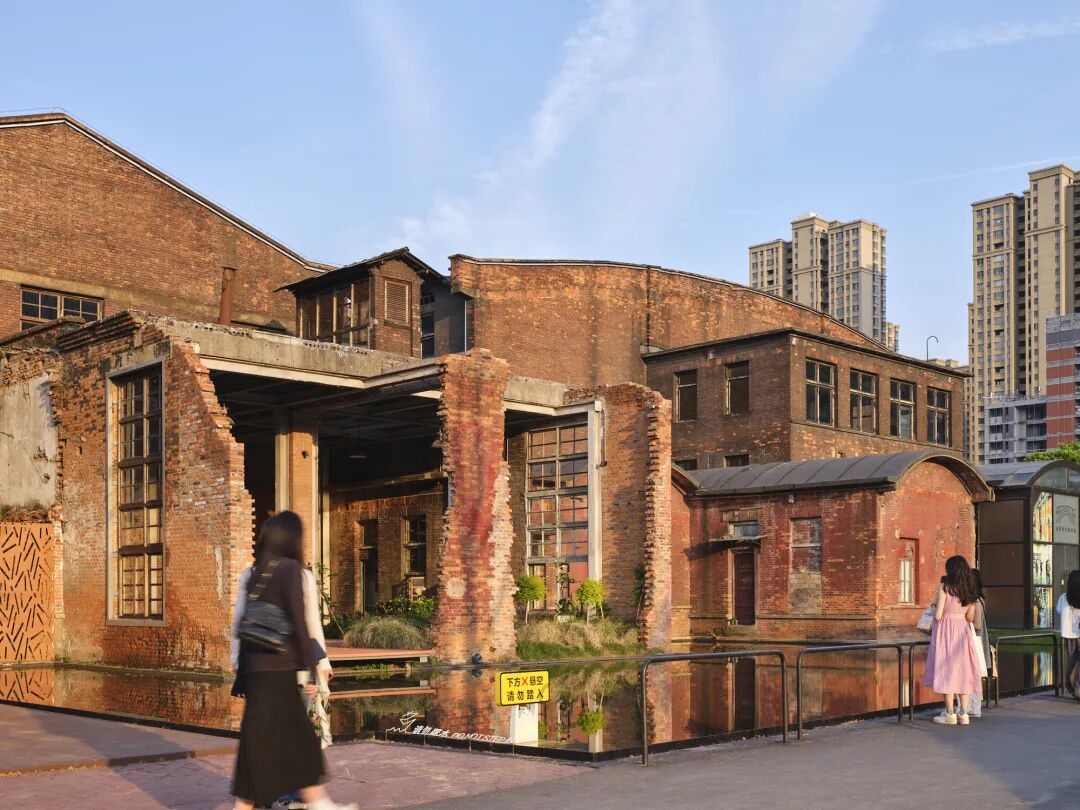
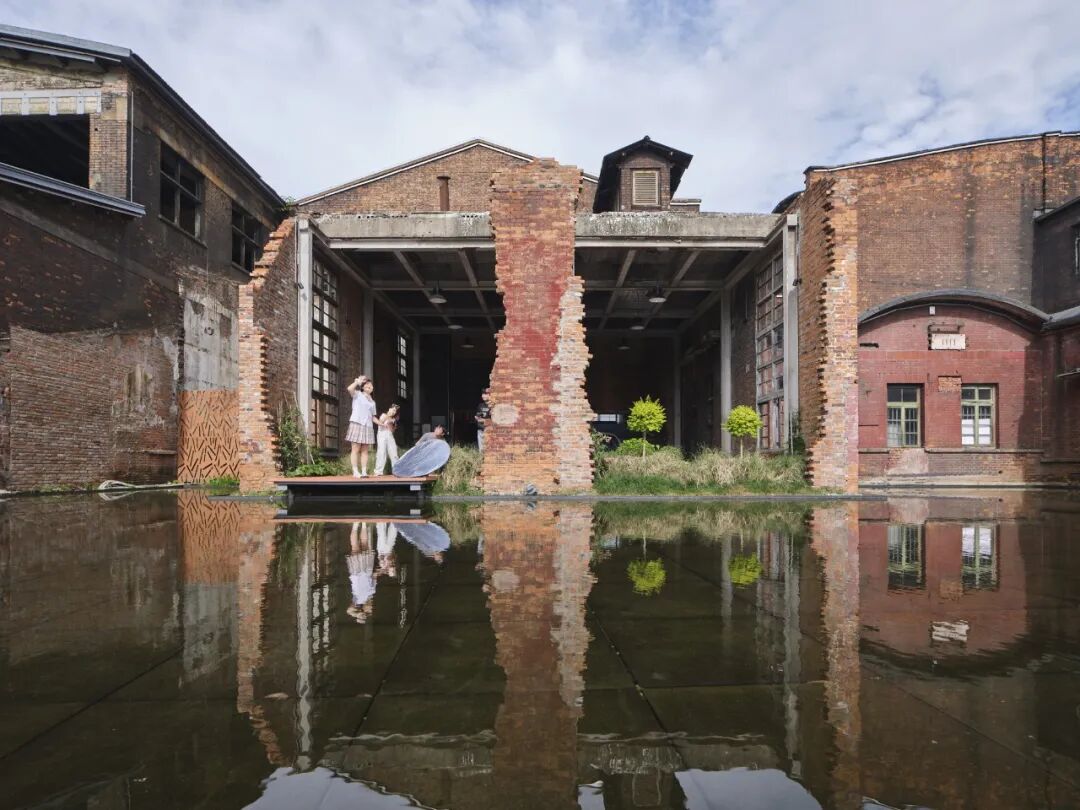
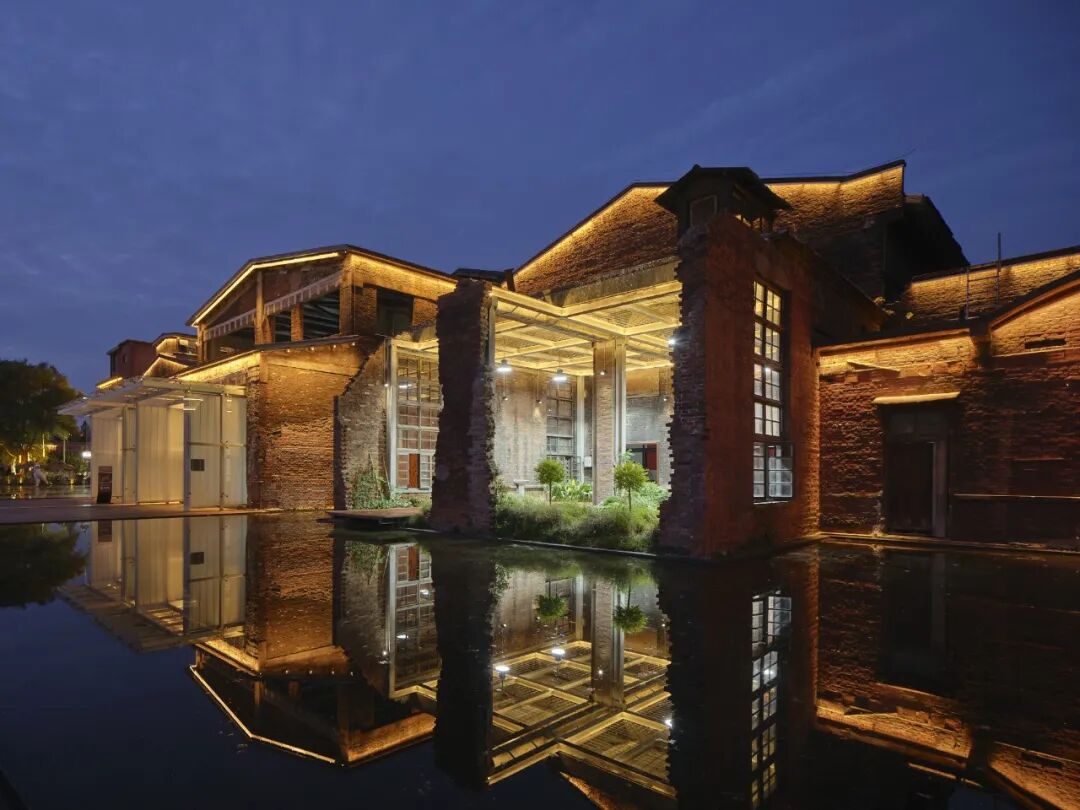
废墟花园位于安徽合肥“合柴1972”文创园内,其前身为合肥柴油机厂总装车间辅房。砖混结构的高大空间废弃多年,清水红砖墙和预制楼板记录了时代特征与生产印记。厂房西立面因机器搬运需要被局部拆除,呈现废墟状态;也正是这一处开口,将外部景观水面与自然环境引入室内。边界处一片自由绽放的玫瑰,模糊了外部与内部。设计希望保留建筑废墟与自然共存的状态,营造一片可观可游的“废墟花园”。
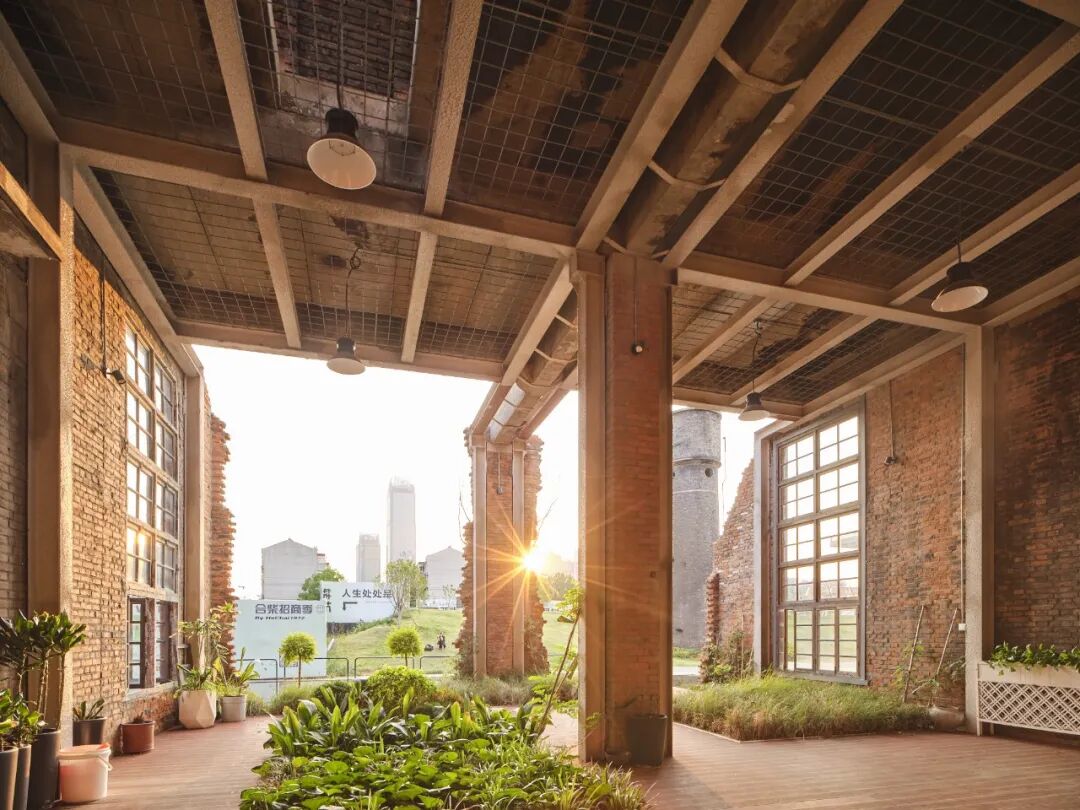
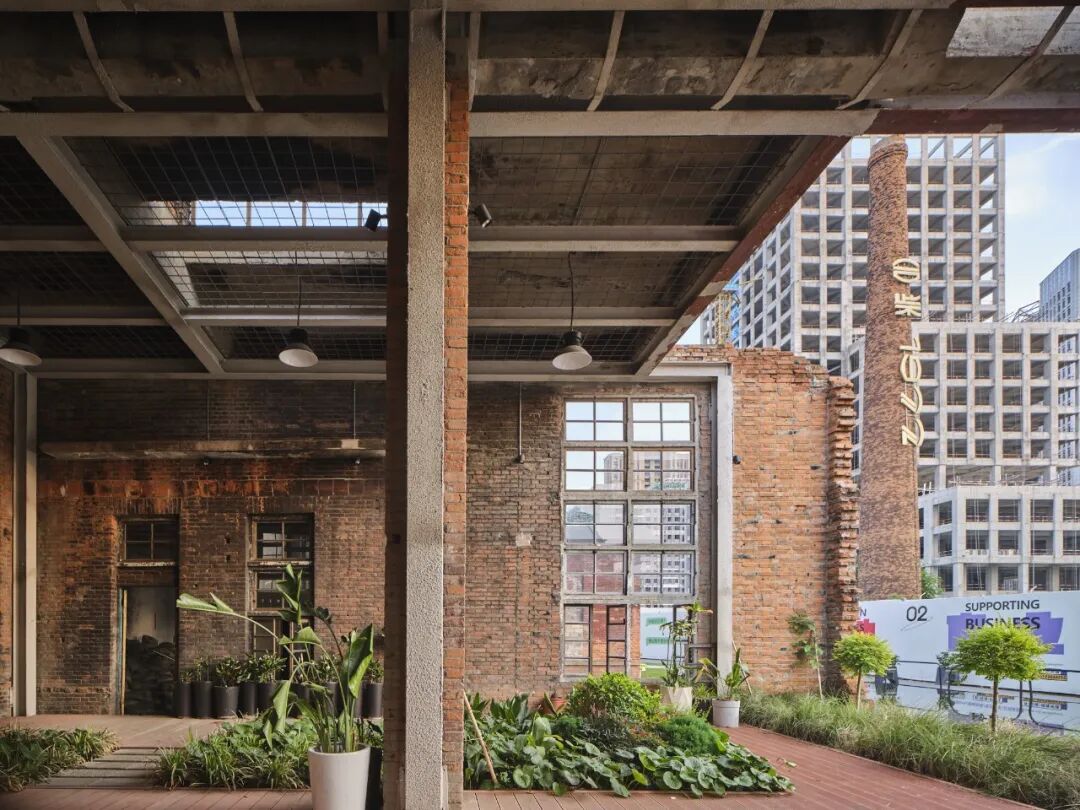
秩序。既有厂房以红砖墙体和柱子承重,混凝土主次梁及预制楼板共同建构了工业建筑清晰的空间秩序。为了实现工业氛围保护和快速施工要求,设计依循原有梁柱走势,在内部置入一组浅色钢结构支撑框架,通过增加次梁密度和防坠落金属网进一步强化秩序、提升安全性能。新建钢结构轻盈而精致,拉近了人与工业建筑的距离和尺度感,新旧结构体系与空间秩序得以透明呈现。
自然。钢结构支撑框架设置于地坪以上,无需开挖基础,最大限度降低对原有结构的干扰。借助钢框架于地面形成的高差,向上铺设防腐木地板,形成回游路径;向下嵌置金属种植槽,营造建筑废墟内的花园意向。植物在此生长、蔓延,由内而外延伸,与园区环境融为一体。
改造后的废墟花园满足了使用的安全要求,延续了厂房的工业记忆。游客穿行于废墟与自然之间,边缘处轻盈伸向水面的平台,宛如静默的舞台,等待游客的停驻、眺望与体验。
项目名称:废墟花园
建设地点:安徽合肥
项目客户:合肥滨投文化创意发展有限公司
建成时间:2023年
设计单位:东南大学建筑设计研究院有限公司、太阳集团tyc122cc
设计主创:董亦楠
设计团队:董亦楠、胡蝶、邹康(建筑);孙逊、袁晶晶(结构);凌启程(电);章黎敏(水)
建筑摄影:薛亮
E N D
本文图片版权归原作者及来源机构所有
想要转载本期推送请后台留言申请授权
Frontiers of Architectural Research是由高等教育出版社和东南大学联合主办的全英文学术期刊,是教育部重点支持的前沿系列(Frontiers)学术期刊中的一本。已被A&HCI收录。本刊于2012年创刊,2022年起改为双月刊(一年六期)。收录论文内容覆盖但不限于建筑设计及其理论、建筑科学及技术、城市研究、风景园林、建筑历史及遗产保护、绿色低碳建筑等研究领域。是一本全球发行并可开放获取(Open Access)的期刊。
Frontiers of Architectural Research优先发表创新突出、科学性和技术性强的研究论文,特定研究领域中的综述性文章和案例分析,采用严格科学方法和使用前沿技术进行研究的论文,同时也欢迎探讨建筑社会属性的高水平论文。按照国际惯例,对所有论文进行严格地同行评议并只接受英文投稿。
Web of Science核心合集A&HCI一区期刊
工程索引数据库Ei Compendex收录期刊
中国科技期刊卓越行动二期项目 英文领军期刊
SCOPUS收录期刊
中国科学引文数据库(CSCD)来源期刊
开放存取期刊目录(DOAJ)收录期刊
被CSTPCD收录为中国科技核心期刊
ProQuest收录期刊
史蒂芬斯数据库(EBSCOhost)收录期刊
2025中国科学院文献情报中心期刊分区表一区期刊

期刊联络
高等教育出版社:010-58556484
东南大学:025-83795543
刊物邮箱:foar@pub.seu.edu.cn
FoAR英文期刊交流QQ群:21608832
在线投稿
刊物主页
http://www.sciencedirect.com/science/journal/20952635
http://journal.hep.com.cn/foar
